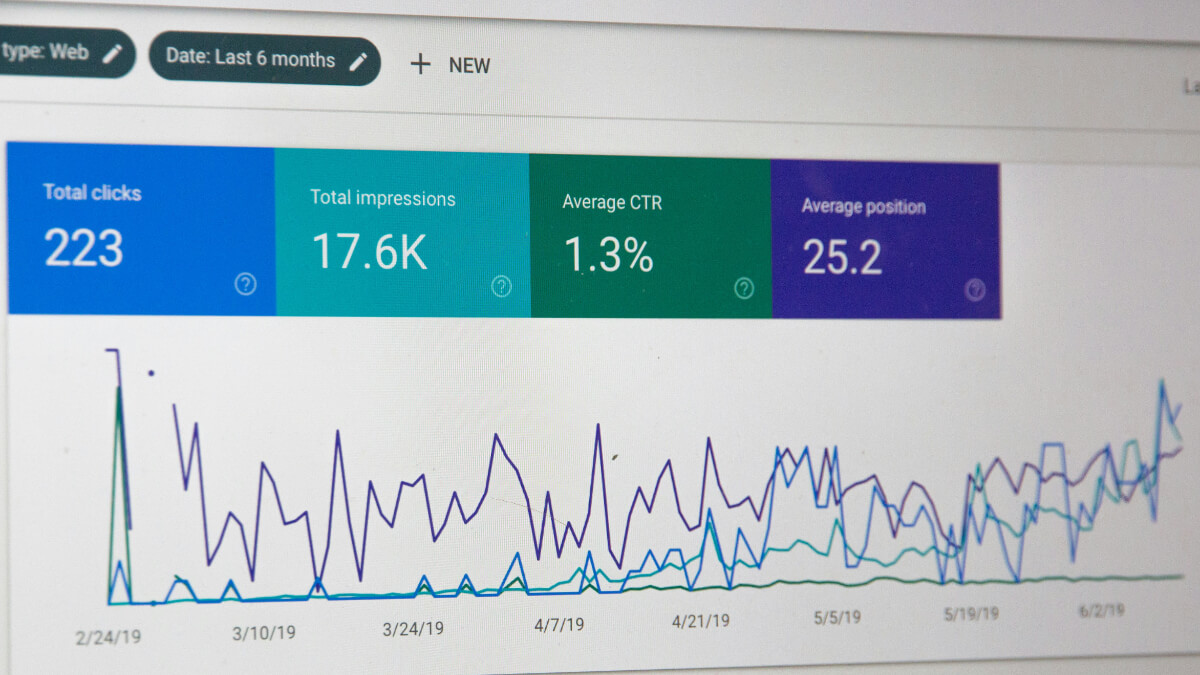
SEO or SEA? This question comes up in almost every initial conversation we have at werank.
It usually comes from business owners or marketing leads who have been working for months with an agency or a freelancer, and who are not sure their budget is going to the right place.
SEO and SEA are not alternatives. They cover different stages of the buying journey and complement each other when used correctly.
But for a service provider in Switzerland, the question is poorly framed from the start. The right angle is not “which channel?”, it is “how does each one actually work in my context?”.
This article lays the foundations. It explains why the topic should be treated differently for a service provider than for an e-commerce business, and what each channel really delivers in 2026, GEO included.
– SEO and SEA are not alternatives. The real question is the order in which to activate them.
– For a service provider, the topic needs to be treated differently. Long sales cycles, low search volumes, high intent, long-tail queries.
– SEO in 2026 includes GEO, visibility in generative AI. It is not a separate channel, it is a layer of SEO that has become essential.
– Priority on transactional content. Informational content supports authority but generates less and less measurable traffic.
Why this question is different for service providers
Guides on SEO and SEA almost always start from a B2C e-commerce model. A visitor lands on the website, compares, buys within minutes.
For a service provider whose mandates are worth several thousand francs, this model does not hold. What is decided in a single visit on a webshop can take six months at an engineering firm or a consulting practice.
Four specificities change the equation.
1. Long sales cycles
Between a prospect’s first search and the signing of a contract, several months often go by. A single channel, whether SEO or SEA, is almost never solely responsible for the final decision.
The prospect comes back multiple times, on different queries, at different stages.
2. Referrals remain the main source
For most SME service providers in Switzerland, word-of-mouth generates the majority of new mandates. But even a referred prospect does their own research before reaching out.
They type the company name, read the services page, compare with two or three alternatives. That is where SEO and SEA come into play.
Not to generate the first point of contact, but to reassure, confirm, and sometimes to tip the balance between several candidates.
3. Low volumes, high intent
An engineering firm does not receive ten thousand monthly searches.
Volumes are often very low, sometimes just a few dozen queries per month. But each query comes from a qualified prospect with a concrete need.
It is the opposite of e-commerce. Less traffic, but a much stronger intent per visit.
4. The queries that matter are long-tail
Not “web design Zurich”, but precise formulations that combine service, qualification and geography.
• Structural engineering for commercial buildings Zurich
• Civil engineer for renovation of multi-family buildings
• Microsoft 365 migration for Swiss SMEs
• Managed IT services Zurich SMEs
• Succession planning SME consulting Zug
• ISO 9001 consulting for mechanical engineering Switzerland

These queries capture real commercial intent, and these are the ones to prioritise, whether in SEO or in SEA. Most competitors who rank on “SEO vs SEA” ignore this specificity. They treat the topic for everyone, which means for no one in particular.
What SEO and SEA really deliver
SEO (Search Engine Optimisation)
In 2026, SEO is no longer limited to the classic organic results on Google.
It also covers visibility in AI-generated answers: AI Overviews, ChatGPT, Perplexity, Claude and others.
It is the same foundational work (relevant content, clear structure, authority), with an additional layer of optimisation for citation by the models. This layer is called GEO (Generative Engine Optimisation).
It is not a separate channel, but a dimension of SEO that has become essential, in the same way mobile optimisation became essential ten years ago.
What SEO does well is capture high intent on precise queries, build a presence that lasts over time, and reach the prospect multiple times in their journey without paying for each interaction.
Once a service page ranks in first position, it keeps generating qualified traffic for months, sometimes years, with a marginal cost close to zero.
What SEO does not do is generate traffic immediately. Three to six months are needed to see measurable results, sometimes more depending on the competition.
SEO also does not let you precisely control who sees your content.
You optimise for an intent, but Google decides the rest.
One point often misunderstood since the arrival of AI. Informational content (explanatory blog articles, general guides) remains useful for building E-E-A-T authority and being cited by LLMs, but it generates less and less measurable traffic to your website.
The models answer directly, without redirecting.
For a service provider expecting visible business results, it is transactional content that delivers the impact. Service pages, comparison pages, content that answers a specific commercial intent.
SEA (Search Engine Advertising)
SEA means buying visibility through auctions on Google Ads and Bing Ads.
You pay for each click and you control exactly when your ads appear, for which queries, in which geographic area, at which time.
What SEA does well is deliver traffic immediately after the launch of a campaign, quickly test which messages or keywords convert, and fill a temporary visibility gap.
For a new service, a seasonal period or a market test, it is the fastest tool in digital marketing.
What SEA does not do is build anything over time.
The day you stop the campaigns, the traffic stops. SEA does not build authority, does not feed your brand into the LLMs, and does not generate residual value once the budget ends. It is a tap, not a capital.
Quick comparison
| Criterion | SEO | SEA |
|---|---|---|
| Time to effect | 6 to 12 months | a few hours |
| Cost model | upfront investment, lasting return | pay per click, continuous |
| Control | optimisation for intent, Google decides | precise targeting, geo, schedule |
| Sustainability | return continues after spend stops | no return after spend stops |
| Trust | more credible in the eyes of visitors | perceived as advertising |
For a service provider in Switzerland, understanding how SEO and SEA actually work is the prerequisite for any decision.
Volumes are low, intent is high, queries are long, and AI absorbs a growing share of informational traffic.
In this context, transactional content and GEO have become the main levers, not general informational content.
The next question is a practical one.
Depending on your current situation (established business, launch of a new offering, seasonal slowdown, competition on your brand keyword), the priority shifts.

Founder of werank and SEO consultant for local SMEs in the Zurich area. Active for over 20 years in the Swiss digital market, today with one focus: identifying the right SEO priorities so your customers find you on Google. Multilingual (DE/EN/FR), pragmatic, and with an approach that stays on it until the important things are done.