In the first article of this series, we set out why pitting SEO against SEA rarely leads to a good decision.
The two channels do not answer the same question, and the real issue is not “which of the two” but “where do you stand, and what does that imply”.
– The real question is not “SEO or SEA”, but “what is your situation”.
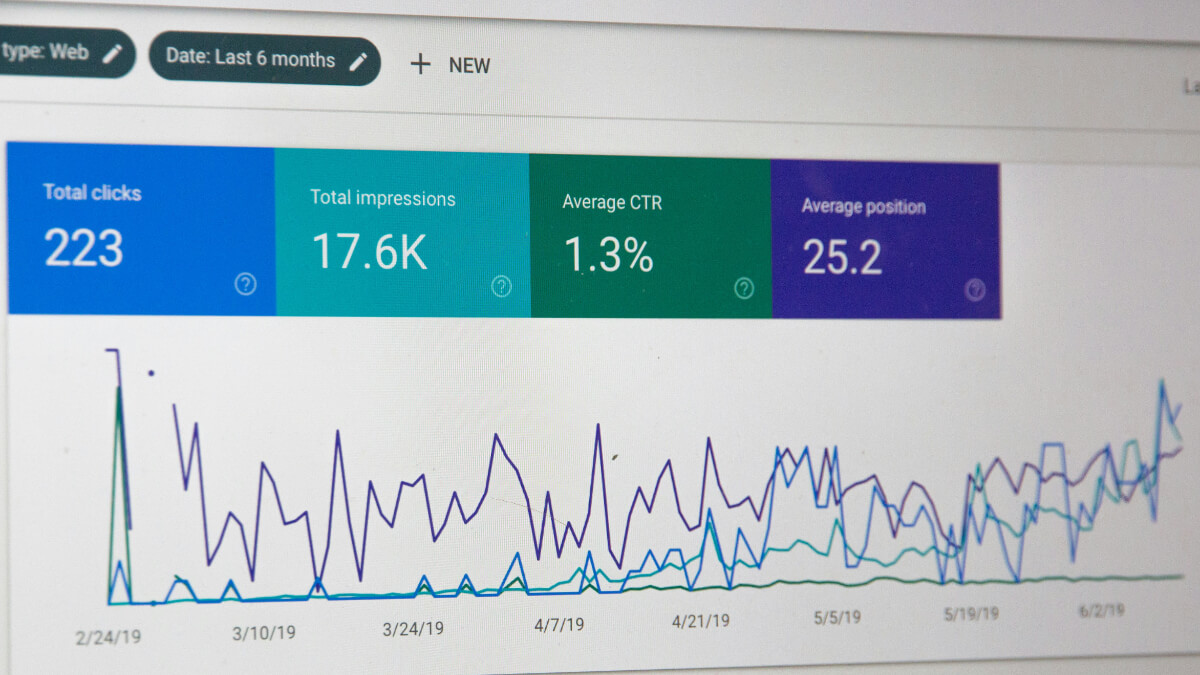
– Before investing, measure four figures. Organic traffic to your service pages, share of branded conversions, average click-through rate, the real source of your leads.
– Four situations, four priorities. Established business, new service, seasonal lull, brand under attack.
– Combining is not always relevant. With a small budget, no measurement or no one to analyse the data, a single well-run channel is the better choice.
That is exactly what we cover here.
When a manager asks us where to start, we never give a ready-made answer.
Most of the time, those who want quick results are right to look first at advertising (SEA). But advertising costs noticeably more than a sound organic structure, and it builds nothing in the long term.
It all depends on the profile. Before choosing a channel, you therefore need to be able to read your own situation.
This article is organised in three parts:
- First, a simple method to measure where you stand before any investment.
- Then four concrete situations we encounter among Swiss service providers, each with its priority.
- Finally, the cases where wanting to combine the two channels is a mistake.
Before deciding, measure where you stand
Most decisions between SEO and SEA are made without a factual basis.
Out of habit, because a previous agency steered things one way, or because a competitor is making noise on one channel.
You cannot steer what you do not measure, and the two channels interact more than people think.

Field observation. An IT provider specialised in Microsoft 365 takes us on. He has been working for months with a freelance Google Ads specialist, and the reports are positive. By cross-checking Analytics and Search Console, we find that his organic traffic has dropped since the campaigns launched. The ads were not creating new demand, they were buying back clicks the site already captured for free in first position. We reworked the campaigns with the freelancer, stopped bidding on keywords already ranking first organically, and the two channels recovered their complementary roles.
Before recommending anything, we draw up a four-step assessment.
- Interview. Understand the history. Which agencies came before, which channels were activated, and the gap between the client’s perception and the real value of what was done.
- Traffic and conversion review. Isolate the twenty per cent of activities that produce eighty per cent of the results.
- Branded versus non-branded. Conversions on the company name are legitimate, but they measure existing awareness, not the effectiveness of an acquisition strategy.
- Audit of service pages. Priority on commercial, non-branded queries and their match with search intent.
On your side, four figures are worth knowing before you even approach a provider.
- Organic traffic to your service pages over twelve months. Not the home page, not the blog.
- Share of conversions coming from your brand. It shows whether your acquisition rests on new demand or on your reputation.
- Average CTR in Search Console by query type. It reveals whether you are seen without being clicked.
- The real source of your signed leads over six months. Word of mouth, SEO, SEA, LinkedIn, events. This is often where the surprises appear.
Four typical situations among service providers
The usual cliché pits the young company against the established firm. That is too crude to decide on. In practice, we mainly encounter four situations, and each calls for a different priority.
Situation 1. Established business that lives on referrals.
This is a very common configuration in Switzerland.
Fine companies, a real reputation, a business that runs almost entirely on word of mouth. Every new client comes through the network or through a former client, and it works.
There is nothing to fix there, it is an asset. The fragility lies elsewhere, in concentration. If a key salesperson leaves or a source of referrals dries up, the long sales cycle of six to twelve months leaves little room to react.
For this profile, the priority is SEO.
These companies do not need a large volume of leads in one month, they need continuity.
SEO is built before you need it. You work on awareness and, above all, on making the site a reference for Google in the field.
So when a prospect looks into the company or its services, they find solid content that confirms the reputation word of mouth has already established.
SEA remains an occasional complement, on the few keywords too competitive to be won organically in the short term.
Situation 2. New service with no organic visibility.
A company launches an offer, sometimes a strategic pillar, sometimes it is a self-employed person starting out.
No page, no authority, no ranking. Unlike the previous situation, business is needed quickly.
The priority is SEA, with SEO in parallel.
Advertising generates results within the first few weeks and lets you test the angles that resonate with the market.
SEO, for its part, takes time. Time for Google to identify the site as a reliable source, time to produce content.
Launching a campaign takes a few days, building organic authority takes months.
So you start with the paid channel, but without becoming dependent on it.
In parallel, you build the service page and the content that will make this visibility last. When SEO takes over, the advertising budget is reduced or redirected.

Situation 3. Seasonal or cyclical lull.
The pipeline slows, the team has capacity, enquiries are needed in the coming weeks.
Some activities are structurally seasonal, tied to winter, to summer, to an occasional demand peak.
We supported, for example, a fondue-related business that lives almost exclusively when it is cold.
For this type of need, SEO covers nothing on a useful scale.
The priority is SEA, almost on its own.
You activate the campaigns during the lulls or in anticipation of a peak, to capture demand when it exists.
Trying to build SEO over four to eight weeks would be a waste.
On the other hand, SEO keeps its value in the background, over the long term, so as not to create total dependence on the paid channel.
And once the lull has passed, what the campaigns learned about messages and audiences feeds the organic strategy.
Situation 4. Competition on the brand keyword.
It often comes up when a new person joins management and wonders why they have to pay for their own brand name.
The question is legitimate.
If the brand keyword really is the company’s main keyword, the site must obviously appear organically, and that is almost always the case.
But as soon as a brand has a certain reputation, we recommend buying that keyword as advertising too.
The reason is simple.
Google Ads does not stop a competitor from bidding on your name.
They cannot write it in their ad, but they can perfectly well target it.
And the first results capture the bulk of the clicks.
According to an analysis of over four million search results by Backlinko, more than half of organic clicks concentrate on the first three positions.
If one of those first results is a competitor who has bought your brand, those are clicks, even leads, going elsewhere.
Field observation. When I led the digital marketing strategy at a large company, an internal discussion called into question the campaigns on our own brand name. Nobody understood why we were paying for a term where we already ranked first organically. The campaigns were cut. Overnight, around twenty per cent of leads disappeared. The competitor buying the brand was capturing the clicks ahead of our natural result.
For this profile, the priority combines both.
SEO for authority and branding, SEA to defend the brand keyword. The cost of a brand campaign is low, because relevance is maximal, the Quality Score high and the bids low. It is one of the rare cases where the return is positive almost immediately.
| Situation | Profile | Priority | In parallel |
|---|---|---|---|
| Established business, referrals | Settled reputation, word of mouth, long cycle | SEO | Occasional SEA on competitive keywords |
| New service | No organic visibility, quick need | SEA | SEO from the start |
| Seasonal lull | Capacity available, demand to activate fast | SEA almost exclusively | SEO in the background |
| Brand under attack | Competitor bids on your name | SEO + SEA brand | — |
When combining SEO and SEA makes no sense
You often hear that you should activate both channels at the same time. In several cases, it is a mistake, and saying so is part of our job.
The decision was never about “SEO or SEA”.
It comes down to your situation, and to the priority it sets. An established business that lives on referrals does not make the same choices as a company launching a service, nor as a seasonal activity, nor as a brand under attack on its own name.
Above all, measure where you stand. The four figures from the start of this article are enough to turn an intuition into a decision.
And if your context does not allow you to run both channels seriously, that is not a problem. Choose one and run it well.
Ultimately, the question was never technical. It is about honestly knowing where you stand before spending the first franc.
Frequently asked questions

Founder of werank and SEO consultant for local SMEs in the Zurich area. Active for over 20 years in the Swiss digital market, today with one focus: identifying the right SEO priorities so your customers find you on Google. Multilingual (DE/EN/FR), pragmatic, and with an approach that stays on it until the important things are done.